 +86 16650237703


Author:Kangdi 18-06-2026
Herbal magnetic patches occupy a unique and growing niche in the global transdermal patch market. By combining bio-magnetic materials (typically ferrite or neodymium magnets, or magnetized powders) with traditional herbal ingredients (mugwort, ginger, angelica, lavender, capsicum) and applying the combination to traditional acupoints, these products claim to deliver enhanced therapeutic effects for pain, circulation, sleep, and general wellness. The scientific basis is debated but the consumer demand is real and growing, with the global magnetic therapy market estimated at over USD 1.5 billion annually and herbal patch products contributing a substantial portion of that market. This engineering reference provides B2B brand owners, formulators, and engineers with the technical depth needed to develop, manufacture, and position herbal magnetic patches responsibly and effectively. At Kangdi Medical, our alternative medicine and bioengineering R&D team has developed magnetic patch technology and integrated herbal-magnetic combination products for over 20 years, with manufacturing expertise across all major product formats in this category.
1. The Concept: Bio-Magnetism Meets Transdermal Herbal Delivery
Herbal magnetic patches are based on a three-part therapeutic concept. The bio-magnetic component: permanent magnets (typically ferrite, neodymium, or rubber-flexible magnetic materials) generate a static magnetic field at the application site, claimed to influence local blood flow, neural activity, and cellular processes. The transdermal herbal component: traditional herbal ingredients are incorporated into the adhesive or matrix layer of the patch, providing gradual release of herbal actives into the skin. The acupoint targeting component: the patch is applied to traditional Chinese medicine (TCM) acupoints (e.g., Yongquan on the foot, Dazhui on the back, Sanyinjiao on the ankle), where the combined effect of magnetic field and herbal actives is claimed to be enhanced. The three components are typically combined in a single product: a magnetic disc or array in the center of the patch, surrounded by a ring of herbal-infused adhesive that delivers the herbal actives to the surrounding skin area.
2. Magnetic Field Physics: Gauss, Polarity, and Gradient
The magnetic field generated by a patch magnet is characterized by three key parameters. Field strength (Gauss or Tesla): the typical strength for therapeutic magnetic patches is 200-3000 Gauss (0.02-0.3 Tesla) at the magnet surface, with strength decreasing rapidly with distance. The strength at the skin surface (1-3 mm from the magnet) is typically 50-70% of the surface strength. Polarity: permanent magnets have north and south poles, and the claimed therapeutic effects vary by which pole faces the skin. The north pole is traditionally claimed to have stimulating and energizing effects; the south pole is claimed to have calming and sedating effects. Most products use the south-pole-out configuration for pain and sleep applications. Gradient: the rate of change of magnetic field strength with distance, which determines how deeply the field penetrates the tissue. Higher gradient magnets produce stronger effects at the surface; lower gradient magnets produce more uniform fields at depth.
3. The Science: What We Know About Static Magnetic Fields
The scientific evidence for static magnetic field therapy is mixed and evolving. The most studied and supported mechanisms include: blood flow effects (some studies show modest increases in microcirculation, though the effect is small and not consistently reproduced), neural modulation (some evidence of effects on nerve firing rates and pain signal transmission, with the proposed mechanism involving ion channel effects), and inflammatory modulation (some evidence of effects on inflammatory mediators, though the clinical significance is unclear). The mechanisms with weaker or conflicting evidence include: cellular signaling effects (some in vitro studies show effects on cell signaling pathways, but in vivo relevance is unclear), pH effects (claims that magnetic fields alter tissue pH are not well supported by evidence), and water structuring (the claim that magnetic fields alter water structure in the body is not supported by biophysical evidence). For brand owners, the responsible approach is to position products based on the supported mechanisms and user-reported benefits, while avoiding overclaiming effects that are not well supported.
4. Herbal Component: Formulation and Permeation
The herbal component of magnetic patches is typically formulated as one of three formats. Essential oil-based: the herbal ingredients are essential oils (e.g., mugwort oil, ginger oil, lavender oil) that are volatile and provide both topical effects and aromatherapy. Essential oils have relatively good skin penetration due to their small molecular size and lipophilicity, but their volatility requires careful formulation to prevent evaporation. Extract-based: the herbal ingredients are standardized extracts (e.g., ginger extract with 5% gingerols, mugwort extract with standardized active markers) that are more stable and have more consistent active content. Extracts typically have lower skin penetration than essential oils and may require permeation enhancers. Powder-based: dried and powdered herbal materials are incorporated into the adhesive or a separate herbal chamber, with the actives released gradually. This format is the most traditional (mimicking TCM moxibustion) and provides sustained release but has less precise dosing. The choice of format depends on the target ingredients, the desired release profile, the regulatory classification, and the manufacturing capability.
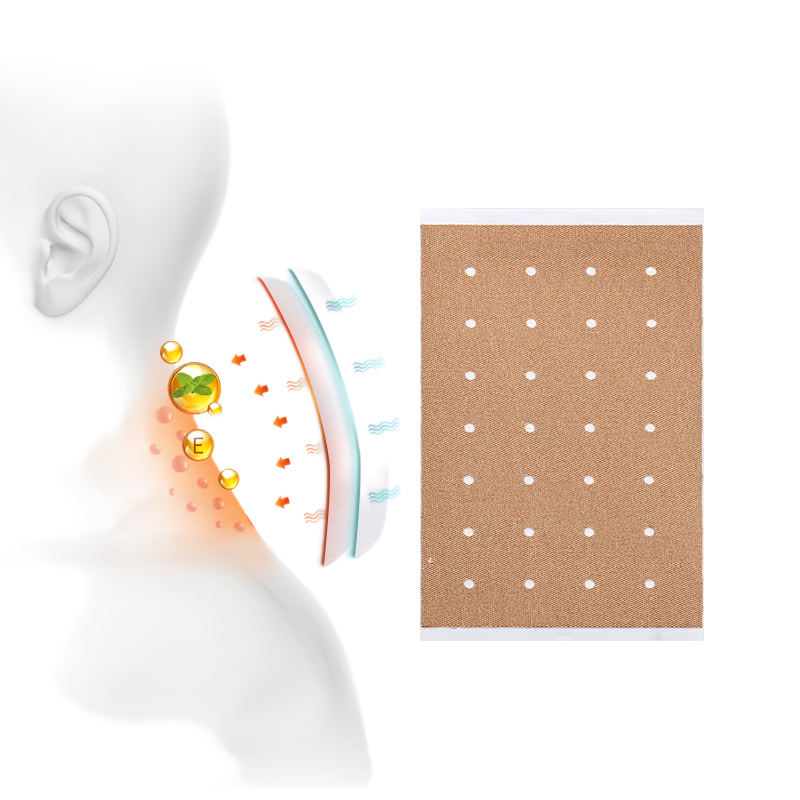
5. Permeation Enhancement: How to Get Herbal Actives Into the Skin
Herbal actives typically have poor skin permeation due to their relatively large molecular size, hydrophilicity, and the barrier function of the stratum corneum. The permeation enhancement strategies used in herbal magnetic patches include: terpenes (menthol, limonene, eucalyptol) which disrupt stratum corneum lipids and enhance permeation of co-applied herbal actives, fatty acids and fatty alcohols (oleic acid, oleyl alcohol) which increase membrane fluidity and drug partitioning, essential oils themselves (which serve as both active ingredients and permeation enhancers), and physical enhancement (occlusion from the patch backing film, which hydrates the stratum corneum and increases permeation). The magnetic field is also claimed to enhance permeation through magneto-mechanical effects on cell membranes and increased microcirculation, though the magnitude of this effect is debated. For brand owners, the choice of permeation enhancement strategy depends on the specific herbal actives, the target release profile, and the regulatory status of the enhancement ingredients.
6. Acupoint Targeting: The TCM Framework
Acupoint targeting is the application of the patch to specific TCM acupoints, which are claimed to correspond to specific therapeutic effects. The most commonly used acupoints in herbal magnetic patches are: Yongquan (KD1, on the sole of the foot) for sleep, calm, and grounding; Dazhui (GV14, below the seventh cervical vertebra) for neck pain, headaches, and immune support; Sanyinjiao (SP6, on the inner ankle above the ankle bone) for menstrual, reproductive, and digestive issues; Zusanli (ST36, below the knee) for digestion, energy, and immune support; Hegu (LI4, on the hand between thumb and index finger) for headaches, pain, and stress; and Ashi points (local tender points) for local pain relief. Brand owners should include clear acupoint diagrams and instructions in their product packaging, with the choice of acupoints aligned with the product's positioning and claims. For TCM-aligned products, this is the most authentic format; for general wellness products, the acupoint targeting can be presented as a "for best results, apply to" recommendation rather than a strict requirement.
7. Magnet Materials and Manufacturing
The choice of magnet material affects the performance, cost, and consumer perception of herbal magnetic patches. Ferrite magnets (ceramic magnets): the most common material, with typical surface field strength of 200-800 Gauss, low cost, good chemical stability, and good temperature stability. The standard choice for most consumer magnetic patches. Neodymium (NdFeB) magnets: rare earth magnets with much higher field strength (1000-3000+ Gauss) for the same size, but higher cost and potential for corrosion if not properly coated. Used in premium products and applications where higher field strength is desired. Rubber-flexible magnetic materials: composite materials with magnetic powder dispersed in a rubber or polymer binder, allowing flexible, conforming patches. Lower field strength (typically 100-500 Gauss) but excellent comfort and conformity. Samarium-cobalt magnets: rare earth magnets with excellent temperature stability and corrosion resistance, used in specialty applications but rarely in consumer products due to cost. The manufacturing process involves magnet procurement, magnet cutting or forming, integration into the patch structure (typically as a central disc or array), and the application of the herbal adhesive or matrix layer.
8. Patch Construction and Design
The construction of a typical herbal magnetic patch involves several layers. The backing layer (top): a flexible polymer film (PE, PET, or non-woven fabric) that provides structural integrity and prevents the patch from sticking to clothing. The matrix layer: the herbal-infused adhesive or hydrogel that contains the active herbal ingredients and adheres the patch to the skin. The magnet: typically a disc or array positioned in the center of the patch, with the chosen polarity facing the skin. The release liner (bottom): a silicone-coated film that protects the adhesive before use and is removed before application. Additional design features may include: a magnetic shielding layer (to direct the magnetic field toward the skin rather than away), a separate herbal chamber (for products that need to keep the herbal ingredients separate from the magnet), and printed markings (to indicate the polarity and the acupoint position). The design must balance magnetic field delivery, herbal release, adhesion, comfort, and cost.
9. Safety Considerations and Contraindications
Herbal magnetic patches are generally considered safe, but several important safety considerations apply. Pacemakers and implanted medical devices: magnetic patches are contraindicated for individuals with pacemakers, implantable cardioverter-defibrillators (ICDs), insulin pumps, or other implanted electronic medical devices, because the magnetic field may interfere with device function. This is the most important and widely-recognized contraindication. Pregnancy: most manufacturers recommend against use during pregnancy, primarily as a precaution. Magnetic fields are unlikely to harm a developing fetus at the field strengths used, but the absence of safety data leads to the precautionary recommendation. Children: use in young children should be supervised, and patches should not be applied to areas where children might ingest them. Skin sensitivity: as with all patches, some users may experience skin irritation or allergic reactions to the adhesive or the herbal ingredients. Open wounds: patches should not be applied to broken or irritated skin. Other medical devices: patches should not be applied directly over transdermal drug delivery patches (e.g., nicotine patches, hormone patches), as the magnetic field may alter drug delivery kinetics. Brand owners must include all these contraindications in their product information.
10. Regulatory Classification by Market
The regulatory classification of herbal magnetic patches varies by market and by the specific claims made. The typical classifications are: medical device (Class I or II) when marketed for specific therapeutic claims (e.g., pain relief, improved circulation), which requires regulatory approval (510(k) in the US, CE marking in the EU, NMPA registration in China); general consumer product when marketed for general wellness or comfort without specific medical claims, with much lower regulatory burden; traditional medicine product in markets with traditional medicine frameworks (China's NMPA simplified pathway for TCM products, Japan's quasi-drug classification, Korea's health functional food category for some products); and cosmetic or personal care product when marketed for skin care or sensory benefits, with cosmetic regulatory requirements. The most common regulatory path for entry-level products is the general consumer product classification, with the medical device classification reserved for products with specific therapeutic claims and clinical evidence. Brand owners should carefully consider the regulatory strategy early in product development, as it affects formulation, testing, and marketing.
11. Quality Control and Testing Standards
Quality control for herbal magnetic patches requires testing across multiple dimensions. Magnet testing: field strength verification (Gauss meter measurement at the skin-contacting surface), polarity verification, and visual inspection for cracks or defects. Herbal ingredient testing: identity verification (HPLC, TLC, or spectroscopic methods), assay for active content (e.g., gingerol content in ginger extract), heavy metals testing (lead, mercury, arsenic, cadmium), pesticide testing, and microbial testing (total plate count, yeast/mold, specific pathogens). Patch-level testing: adhesion testing (peel strength, shear strength), release liner peel force, water vapor transmission through the backing, and stability testing (accelerated and real-time). Safety testing: skin irritation testing (in vitro or in vivo), sensitization testing, and cytotoxicity testing for the herbal ingredients and adhesive components. The testing program should be appropriate for the product classification and target market, with more stringent testing for medical device classifications and lighter testing for general consumer products.
12. Market Positioning and Brand Strategy
The herbal magnetic patch market has several successful positioning strategies. Traditional Chinese medicine positioning: emphasizes the TCM heritage, the acupoint targeting, and the integration with TCM practices. This positioning works well in Asian markets and in the growing TCM consumer segment in Western markets. Wellness and natural positioning: emphasizes the natural ingredients, the drug-free approach, and the integration with broader wellness practices (yoga, meditation, aromatherapy). This positioning works well in the natural product and wellness channels. Performance positioning: emphasizes the engineering, the magnetic field strength, and the integration of modern science with traditional practice. This positioning works well in the premium consumer segment. Combination positioning: combines the magnetic and herbal effects with other active ingredients (e.g., menthol for cooling, capsicum for warming, hyaluronic acid for skin care). This positioning works well in the multi-functional product segment. The most successful brand strategies typically focus on a clear positioning with consistent messaging and product formulation.
13. Innovation Frontiers: Smart Magnetic Patches
Innovation in herbal magnetic patches is moving in several interesting directions. Variable-polarity patches: products with reversible polarity, allowing the user to switch between stimulating and calming effects. Higher-field miniaturized magnets: products with stronger magnets in smaller form factors, allowing more targeted application and more comfortable wear. Integrated electronics: patches with embedded sensors (temperature, motion) or microcontrollers that provide feedback on usage patterns or adjust the magnetic field. This is an emerging category with significant potential but also significant cost and complexity. Combination with active drug delivery: patches that combine magnetic field with transdermal drug delivery, using the magnetic field to enhance drug permeation (the "magnetophoresis" concept). This is a research-stage technology with significant potential but limited commercial availability. Sustainability innovations: biodegradable backing materials, plant-based adhesives, and recyclable packaging, addressing the growing consumer demand for sustainable products.
14. Build Your Herbal Magnetic Patch Brand on Sound Engineering
Herbal magnetic patches are a product category that combines traditional practice with modern engineering. Brand owners who invest in sound engineering — appropriate magnet selection, well-formulated herbal components, careful acupoint targeting, and rigorous quality control — establish products that deliver on their claims and earn consumer trust. The market is growing, particularly in the wellness and traditional medicine segments, and the opportunity is substantial for brands that combine authentic tradition with modern quality and marketing. At Kangdi Medical, we support brand owners across the full spectrum of herbal magnetic patch products, from simple ferrite-magnet patches with essential oil adhesive to complex combination products with integrated electronics.
15. Partner with Kangdi Medical for Your Herbal Magnetic Patch Development
If you are developing a herbal magnetic patch or related combination product, contact Kangdi Medical. Our team provides: magnet selection and engineering support, herbal formulation development including extraction, standardization, and permeation enhancement, acupoint targeting guidance, manufacturing in consumer-grade and medical-device-grade facilities, regulatory support for the target market classification, and quality control program design and implementation.
Email: hnkangdi888@hotmail.com
WhatsApp: +86 15517541011
Website: www.kangdimedical.com